
Does a Garden Irrigation System Need a Pump and Tank?
When we first discuss a new garden irrigation system with a customer, one of the most important things we need to understand is the available water supply.
It is easy to assume that an automatic watering system can simply be connected to an outside tap. For some smaller systems, that may be perfectly suitable. For larger gardens, however, the available pressure and flow may not be enough to operate the system effectively, particularly where several sprinklers or watering zones are required.
That is why every successful garden irrigation installation starts with understanding what needs to be watered and what water supply is available to do it.
Why Water Pressure and Flow Matter to Irrigation Design
Pressure and flow are closely related, but they are not the same thing.
Pressure is the force pushing the water through the system, while flow is the volume of water available over a given period. You can therefore have an outside tap that appears to produce good pressure but does not provide enough flow to run several sprinklers effectively at the same time.
Mains water pressure can also vary. Ofwat notes that pressure can be affected by factors including the elevation of a property and how much water other customers in the area are using. During periods of particularly high demand, the pressure available at a property can change.
When we design a system, we therefore look at the available supply alongside the number and type of irrigation zones required. We do not simply select sprinklers first and work out the water supply afterwards.
Can a Garden Irrigation System Run Directly From the Mains?
Yes, some smaller garden watering systems can operate directly from the mains if the available pressure and flow are suitable.
TCR installs systems ranging from straightforward watering arrangements through to fully automated installations, so there is no requirement for every customer to have a tank and pump. Our own guidance on irrigation water supplies explains the different sources that can potentially be used, including mains water and stored rainwater.
A smaller system might operate one watering zone at a time and work perfectly well within the available supply. As the garden, number of sprinklers or watering demand increases, however, the limitations of a direct mains connection become more important. TCR specifically notes that small irrigation stations may be able to run directly from the mains, subject to the available supply and relevant requirements.
The important point is that garden size alone does not provide the answer. The supply needs to be assessed before the system is designed.
When Does an Irrigation System Need a Pump and Tank?
Larger irrigation systems will commonly use a storage tank and pump.
The tank creates a stored supply of water for the system, while the pump provides the pressure and flow needed to operate the irrigation equipment. This can allow larger sprinklers or a greater number of sprinklers to operate effectively than would be possible directly from a limited mains supply.
At TCR, we design pumped irrigation systems for installations where this type of setup is required. Depending on the system, pumps can be installed within the tank or housed separately, and either fixed-speed or variable-speed equipment may be appropriate.
This is particularly relevant for larger gardens, estates or installations with several lawn and planting zones. Rather than reducing the system design to whatever the outside tap can support, a properly specified pumped system gives us greater control over how the irrigation network operates.
How Do We Choose the Right Tank and Pump?
There is no standard tank or pump size that will suit every garden.
We need to consider how much water the system will use during its planned irrigation cycle, how much water is entering the tank while the system is operating, the flow required by individual zones and how quickly the tank can recover between watering periods.
It is also important to distinguish between a tank’s overall storage capacity and the amount of water that is actually usable by the irrigation system. TCR’s guidance on tank and pump sets explains why this needs to be considered as part of the wider system design rather than choosing components in isolation.
Space matters too. The position of the tank, pump and associated equipment needs to work with the property and the garden, so these details are considered during the design stage.
Can Rainwater Be Used for Garden Irrigation?
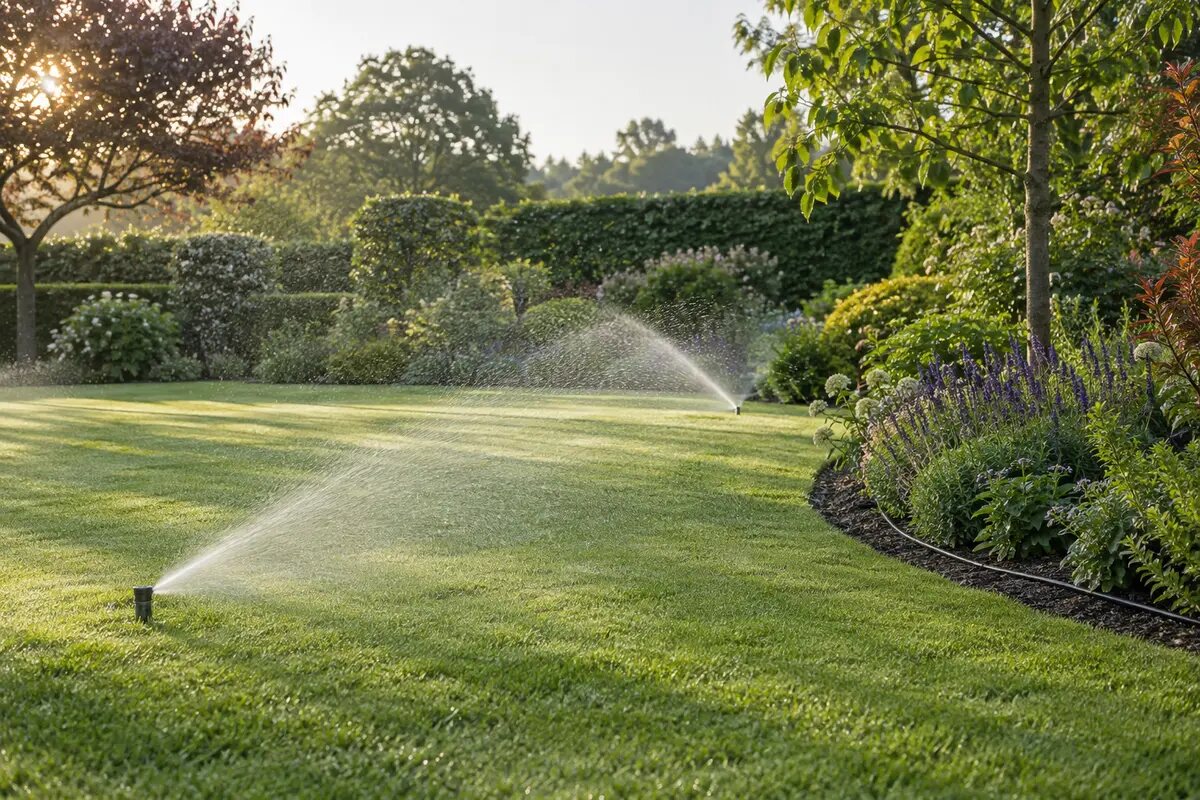
Yes. Where the property and proposed installation allow it, stored rainwater can be incorporated into a garden irrigation system.
Rainwater collected from roofs can be stored and then pumped into the irrigation network. TCR designs systems that can make use of harvested rainwater, and our water supply options include rainwater alongside mains and other potential sources.
The available storage and likely irrigation demand still need to be assessed properly. Rainwater is not an unlimited resource, particularly during prolonged periods of dry weather when the irrigation system is likely to be needed most.
For that reason, rainwater harvesting needs to be considered as part of the overall system design rather than simply connecting a small water butt to a large automatic installation.
What Do UK Water Regulations Mean for Irrigation Installation?
The way a permanent irrigation system connects to the mains water supply also needs to be considered carefully.
Backflow protection is important because the drinking-water supply must be protected against contamination from water within an irrigation system. The RHS notes that outside taps need appropriate backflow protection and that permanent automated irrigation connected to the mains will often require a break tank providing an air gap. Water Regs UK also advises that irrigation installations need to be considered according to their design, size and level of backflow risk.
The appropriate arrangement depends on the individual installation and requirements of the relevant water undertaker. This is another reason why a permanent irrigation system should be properly designed rather than treated as a simple extension of an outside tap.
What Do We Check Before Designing Your System?
Before recommending a system, we need to understand the garden as a whole.
That includes what needs watering, the layout of lawns and planting, the available water source, pressure and flow, the number of watering zones required and where equipment such as tanks, pumps and controllers could be positioned.
We also consider the different watering requirements across the garden. A large lawn, a newly planted border and an established hedge do not necessarily need the same method or watering schedule. Dividing the installation into appropriate zones allows the system to apply water where it is genuinely required.
Automation can then be used to control those zones, with TCR able to install systems that take factors such as rainfall, temperature and sunlight into account.
If you are at the early stages of considering irrigation and want to understand the wider process first, our guide to garden watering system installation explains how we approach planning and fitting a system.
The Right System Starts With the Right Water Supply
So, does your garden irrigation system need a pump and tank? Sometimes it does, and sometimes it does not.
A smaller installation may work effectively from the available mains supply, while a larger multi-zone system may need dedicated water storage and pumping to provide the required performance. The right answer depends on the garden, the water supply and what the finished system needs to achieve.
At TCR Watering, we assess these factors before designing the installation so that the system is built around the property rather than relying on guesswork. If you are considering a new garden watering system, speak to our team and we can assess the available supply and recommend the most appropriate setup for your garden.
Many homeowners assume that an irrigation system needs to be installed while a garden is being landscaped. Once the lawn is established, borders have matured and patios are finished, it can feel as though the opportunity has passed.
In reality, irrigation can often be added to an existing garden without undoing years of work. The exact process depends on the layout of the garden, the areas that need watering and the type of system required, but careful planning can keep disruption to a minimum.
At TCR Watering, we begin by assessing the garden as it is now. This allows us to design a system around existing lawns, borders, planting and hard landscaping rather than trying to force a standard solution into the space.
Can Irrigation Be Added to an Existing Garden?
An established garden does not prevent you from having a professionally installed irrigation system.
In many cases, seeing how the garden has developed helps us understand where reliable watering would make the biggest difference. Some borders may dry out more quickly than others, containers may need frequent attention, and established hedges or newly added planting may benefit from more targeted watering.
During the initial assessment, we consider features such as:
- Lawns and planted borders
- Mature shrubs, trees and hedges
- Paths, patios and other hard landscaping
- Differences in sunlight and shelter
- Changes in ground level
- Existing water supplies
- Areas that may be redesigned in the future
This information helps us plan practical pipe routes, watering zones and control points. Our irrigation installation service is tailored to the garden, so the finished system reflects what actually needs to be watered rather than treating every area in the same way.
How Much Disruption Will Installation Cause?
Some temporary disturbance may be needed, particularly where underground pipework or pop-up sprinklers are being installed. However, this does not usually mean digging up the entire garden.
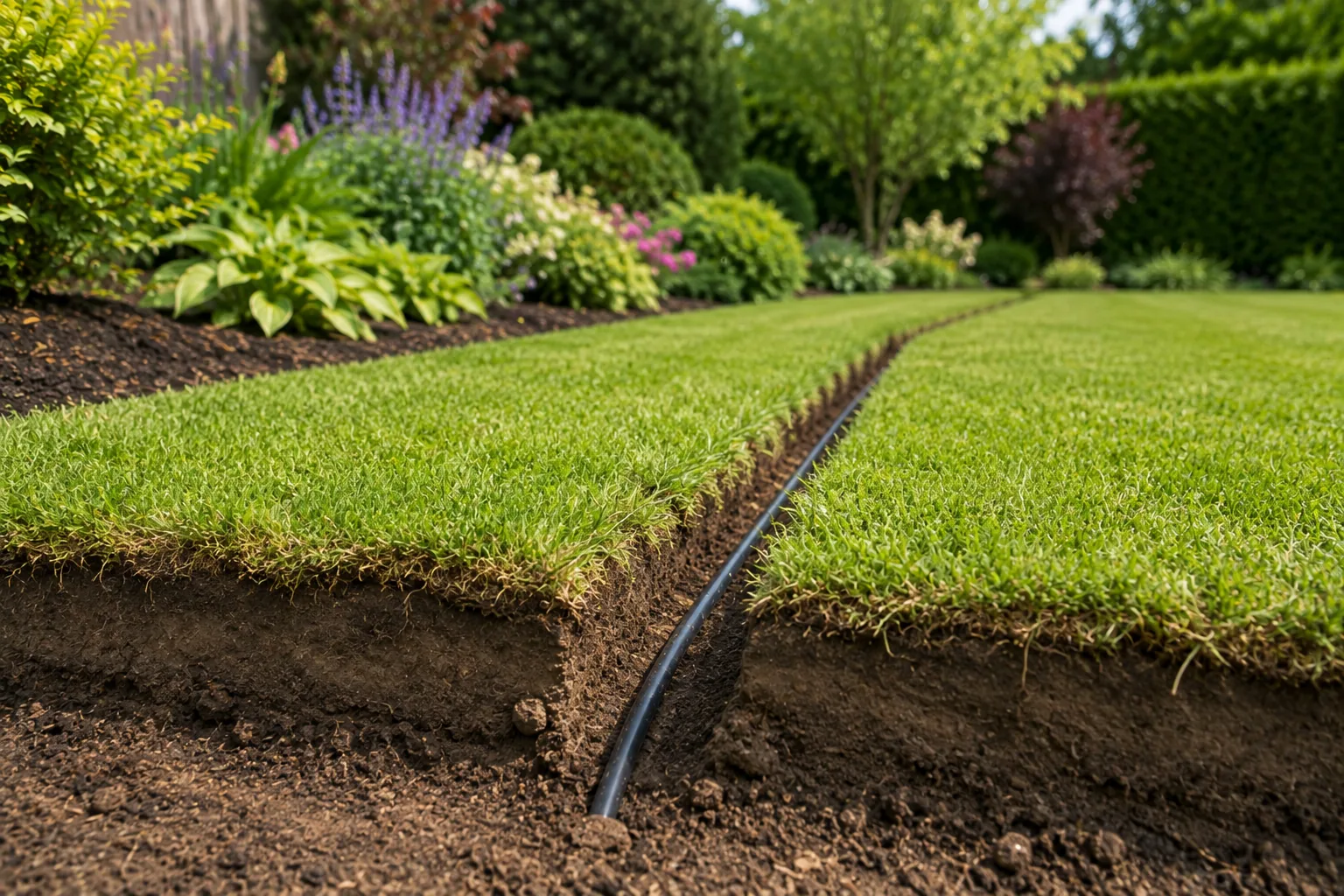
The level of work depends on the type of system and how the garden is laid out. Drip lines for established borders can often be routed around existing plants and hidden beneath soil or mulch. Lawn irrigation normally requires underground pipework, so narrow areas of turf may need to be lifted or carefully accessed during the installation.
Patios, paths, walls and mature planting can all affect the route, which is why the survey and planning stage is so important. We look for the most practical way to reach the required areas while avoiding unnecessary disturbance.
Before work begins, we explain which parts of the garden may need temporary access, how we plan to minimise disruption and what you can expect once the installation is complete. This gives you a clear picture of the work rather than leaving you to guess what may be involved.
Can Pipework Be Mole Ploughed Through an Established Lawn?
Where the layout and ground conditions are suitable, we can use a mole plough to install irrigation pipework through an established lawn with considerably less disturbance than conventional trenching.
Rather than excavating an open trench along the full length of the pipe route, the mole plough creates a narrow opening in the ground and feeds the pipe into position as it moves across the lawn. The ground closes back around the pipe, leaving only a relatively narrow line at the surface that can then be carefully reinstated.
This can be particularly useful in established gardens where homeowners want to avoid having sections of lawn left open while pipework is installed. It also reduces the amount of soil that needs to be excavated, moved and replaced, helping us keep the installation area tidier and minimise the impact on the surrounding garden.
Mole ploughing will not be suitable for every property. Access, ground conditions, existing underground services and the proposed pipe route all need to be considered first. Where it is practical, however, it can provide an effective way of installing underground irrigation pipework while protecting an established lawn as much as possible.
Does Every Part of an Established Garden Need Irrigation?
Not necessarily. A good irrigation system should focus on the areas that genuinely need support.
Different parts of the garden may have very different watering requirements. Newly planted shrubs and borders often need more consistent moisture while they establish. Containers and sheltered areas may dry out quickly, while mature planting in a shaded section may need far less attention.
Established lawns are another consideration. In a typical UK summer, an older lawn may temporarily lose colour during a dry spell and then recover when rainfall returns. Some homeowners still want lawn irrigation to maintain its appearance, but this should be a deliberate choice rather than something automatically included in every system.
By dividing the garden into separate watering zones, we can apply water more accurately. This avoids running the whole system whenever only one area needs attention and helps reduce unnecessary water use.
Which Irrigation Methods Work Best in Established Gardens?
Most established gardens benefit from a combination of watering methods.
Drip lines can work particularly well around borders, shrubs and hedging because they deliver water directly to the soil close to the roots. They can usually be hidden beneath mulch, keeping the system discreet as the planting develops.
Pop-up sprinklers can provide even coverage across lawn areas while remaining below ground when they are not being used. Micro-sprays may be suitable for selected planted sections where a wider but controlled spread is helpful.
Separate zones allow these different methods to operate independently. A sunny border does not need to follow the same watering schedule as a shaded hedge or an established lawn.
The right setup depends on the garden, rather than one system being suitable for every property. Our guide to garden watering system installation provides more information about how irrigation systems can be planned around different layouts and requirements.
What Do We Check Before Installation Begins?
A site assessment helps us understand whether the proposed system is practical and what equipment may be needed.
We look at the available water pressure and flow, as these affect how many areas can be watered at once. Depending on the garden and the scale of the system, a pump or water storage tank may also need to be considered.
We will also discuss:
- Which areas need automatic watering
- Where underground pipes or drip lines can be routed
- Whether turf or planting will need temporary access
- How hard landscaping affects the installation
- Where controllers, valves and accessible components will be placed
- Whether future garden changes need to be allowed for
- How watering schedules can be adjusted throughout the year
Taking time to work through these points helps avoid compromises later and ensures the system is designed around the garden properly.
Can an Automated System Respond to UK Weather?
An irrigation system should not simply water the garden at the same time every day regardless of the weather.
Timers allow individual areas to run on suitable schedules, while rain sensors and compatible controllers can help prevent unnecessary watering after rainfall. More advanced control options may also take factors such as temperature and sunlight into account.
This is particularly useful in the UK, where conditions can change quickly. A warm, dry week can be followed by several days of rain, so it is important that the system can be adjusted rather than continuing to water unnecessarily.
We explain how the controls work once the system is installed and can help set up the initial programmes. It is still sensible to review the schedule as the seasons change and as the garden develops.
What Happens Once the System Is Installed?
After installation, we test each watering zone, check the coverage and make sure the system is operating as intended. We also show you how to use the controller and explain any basic adjustments you may need to make.
Gardens do not stay exactly the same. Plants grow, borders change and new areas may be added, so irrigation systems can occasionally need adjustment. Sprinkler heads, emitters and control settings may also need checking over time.
Our irrigation system servicing can help keep the installation working efficiently and allow the system to be adapted as the garden changes.
Irrigation Can Work Around the Garden You Already Have
Having an established garden does not mean you have missed the opportunity to install irrigation. With a proper survey and a carefully planned design, a system can often be introduced while protecting the features and planting that are already in place.
The amount of work required will depend on the garden, but our aim is always to choose sensible routes, minimise unnecessary disruption and install a system that supports the areas that genuinely need watering.
Speak to TCR Watering to arrange an assessment and find out what irrigation options would be suitable for your garden.