
Why Soil Type Matters When Installing a Garden Irrigation System
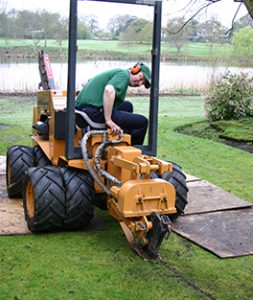
When planning a garden irrigation system, it is easy to start by thinking about sprinklers, controllers and where the pipework will go. One of the things we consider before any of that, however, is what happens to the water once it reaches the ground.
Soil type can make a significant difference to how quickly water soaks in, how far it spreads and how long it remains available around plant roots. A watering system installed in a heavy clay garden should not necessarily be designed or programmed in the same way as one serving light, free-draining soil.
At TCR Watering, our garden irrigation installations are designed around the individual garden, including its layout, planting, soil conditions and available water supply. There is no standard system that will suit every property.
Why Does Soil Type Affect Garden Irrigation?
The important thing with irrigation is not simply getting the surface of the garden wet. Water needs to reach the root zone in a controlled and useful way.
Different soils handle that water differently. Clay contains very fine particles and holds relatively large amounts of moisture, but drains slowly. Sandy soil behaves almost in the opposite way: it drains quickly and can lose moisture much faster. Loam generally sits somewhere between the two, although conditions can still vary considerably within an individual garden.
These differences influence the way we design a system, from the irrigation method and layout through to the way different areas are divided into watering zones.
How Does Clay Soil Affect an Irrigation System?
Clay soil can retain water very effectively, which is useful during dry periods. The challenge is that it absorbs and drains water relatively slowly.
If water is applied faster than the ground can take it in, it can begin to collect on the surface or run away from the area that actually needs it. Simply increasing the amount of water being applied is therefore not the answer.
A properly designed system needs to apply water in a way that allows it to move down into the soil. Our approach to garden watering is based on delivering water into the root zone while avoiding unnecessary surface flooding. Depending on the garden, that may mean adjusting application rates, separating areas into different stations or using multiple watering cycles rather than one prolonged application.
What About Sandy or Free-Draining Soil?
Sandy soils tend to drain much more quickly after rain or watering and hold less moisture than heavier soils. That can make areas of the garden dry out noticeably faster, particularly during warm or windy weather.
Again, the answer is not simply to add as much water as possible. We need to think about where the roots are, how quickly the water is moving through the soil and whether individual planting areas need to be managed separately.
Soil also affects how water spreads sideways. RHS guidance notes, for example, that water from seep hoses travels further sideways through heavier soil than it does through lighter soils. This is exactly the sort of practical difference that can affect the spacing and layout of an irrigation installation.
Two gardens may contain very similar plants but still require different watering designs because the ground beneath them behaves differently.
Is Loamy Soil Easier to Irrigate?
Loamy soil usually offers a useful balance between drainage and moisture retention because it contains a mixture of clay, sand and silt. That does not mean every loamy garden can be treated in exactly the same way.
Soil can vary across a single property. Landscaping, previous building work and the addition of topsoil or organic matter can all create different conditions within relatively small areas. The RHS notes that soil type can change considerably over short distances where construction or landscaping has mixed different soils together.
That is why soil type is one part of our assessment rather than the only factor determining the system.
How Does Soil Affect the Type of Irrigation We Install?
TCR Watering installs a range of irrigation methods, and the right combination depends on both the area being watered and the conditions within it.
Pop-up sprinklers are commonly used for lawn areas. Micro-sprinklers can be useful within suitable flower beds because they can be moved or adjusted as planting develops. Drip irrigation can work particularly well for hedges, larger shrubs, narrow borders and beds that are not regularly turned over. You can see more about the different sprinklers and irrigation methods we use on our website.
The important point is that equipment should not be chosen in isolation. Soil conditions, planting, root depth and the amount of sun or shelter all need to be considered alongside the type of sprinkler or emitter.
Why Are Irrigation Zones So Important?
One of the ways we account for different conditions across a garden is by dividing the irrigation system into separate stations or zones.
There is little benefit in watering a sunny border with free-draining soil on exactly the same programme as a shaded section of heavier ground. Even where the planting looks similar, the amount of moisture available around the roots can be quite different.
TCR designs garden irrigation systems so areas with different requirements can be controlled separately. When deciding how those stations should be divided, we consider factors including the plants being watered, their root depth, exposure to sun and wind, sprinkler application rates and the available water flow.
This gives us far more control over where water goes and helps avoid treating the whole garden as though its requirements are identical.
How Can You Tell What Type of Soil You Have?
You can get a rough indication simply by handling damp soil.
Clay soil tends to feel smooth and sticky when wet and can usually be rolled into a shape fairly easily. Sandy soil feels noticeably gritty and tends to break apart rather than holding its shape. Loam usually feels more balanced, without the extreme stickiness of heavy clay or the loose texture of very sandy ground.
We will design your irrigation system with the correct tank, pump and control system to accommodate varying soil types and the topography of your garden.
A Good Irrigation System Starts With the Garden Itself
There is no single irrigation layout that will work equally well in every garden. Soil is one of the reasons why.
A system needs to deliver water where plants can actually use it, at a rate that suits the ground and in a way that reflects the different conditions around the garden. That might mean pop-up sprinklers across the lawn, targeted irrigation through borders and several independently controlled watering zones.
Our approach to irrigation is focused on maintaining moisture where it is useful, around the root zone, rather than simply wetting the surface.
If you are considering a new garden irrigation system, speak to TCR Watering. We can assess the garden, planting and soil conditions and design an installation around what the space actually needs.
Back to News