
Laying Turf or Planting New Borders This Summer? Why Irrigation Should Be Part of the Plan
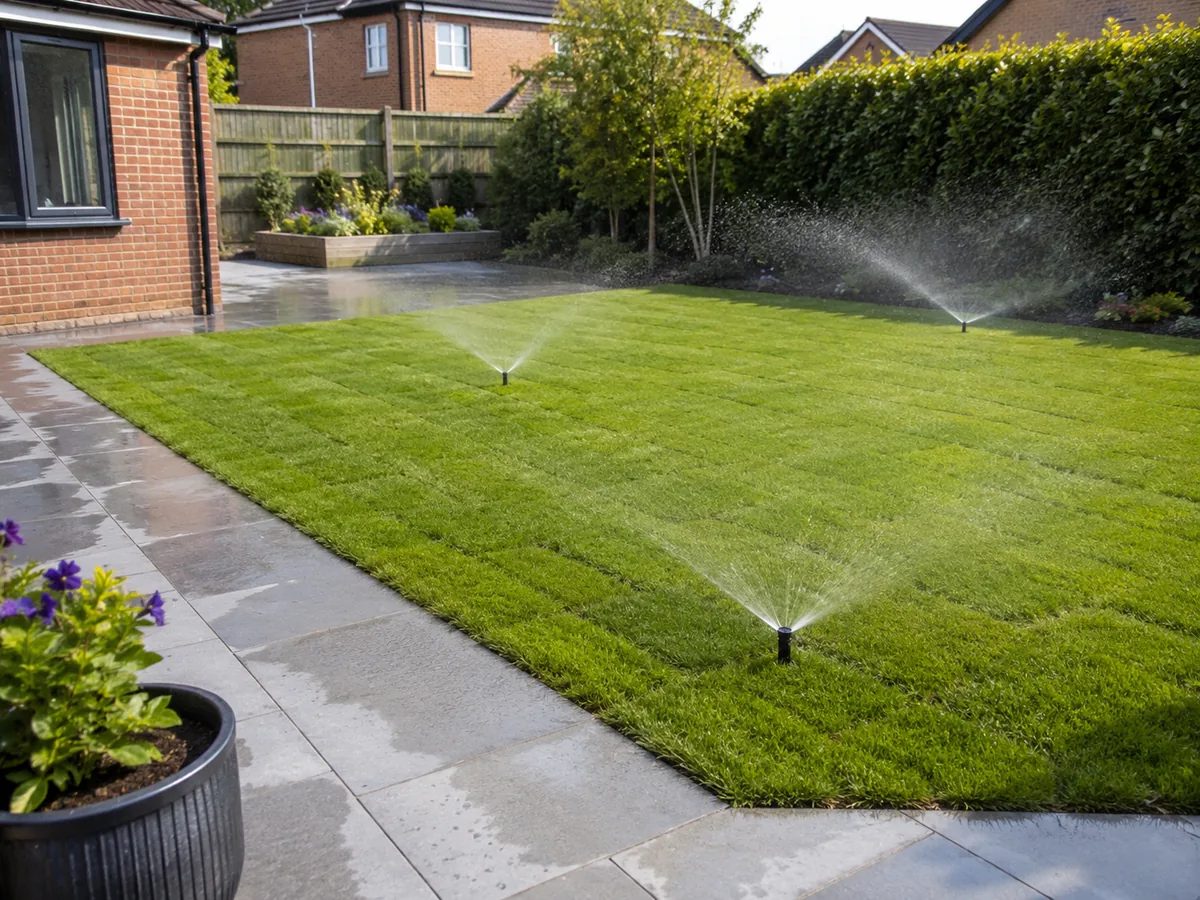
By June, a lot of garden projects are either finished or very close to it. New turf has gone down, borders have been replanted, and the garden is starting to look the way it was meant to. That is usually the point where attention stays on the visible side of the job, how it looks, how it is filling out, and what it should look like by mid-summer.
What is easier to overlook is the part that keeps it all going once the weather turns warmer. New lawns and freshly planted borders need reliable watering while they establish. The RHS notes that newly sown or turfed areas need regular watering through their first summer, and newly planted stock needs consistent watering in dry spells so moisture reaches the root zone properly.
New lawns and fresh borders need more help than established areas
A mature garden can usually cope with a bit more inconsistency. New turf and fresh planting cannot. Their roots are still developing, which means they are far more dependent on steady moisture levels in the early weeks and months.
That is especially important with turf. The RHS warns that if new turf is allowed to dry out, it can shrink and fail to knit together properly, and that simply wetting the surface can encourage shallow rooting rather than helping the lawn establish well. Newly planted shrubs and borders have similar issues. The surface can look damp enough, while the soil around the roots is still too dry. The RHS highlights insufficient watering in the first two years as a major cause of poor establishment for trees and shrubs.
That is why watering needs to be thought about as part of the project, not just something to deal with afterwards.
Lawns and borders should not be watered in the same way
One of the most common mistakes in a new garden is treating every area as if it needs the same approach. In reality, lawns, borders, raised beds and vegetable areas often need different watering methods.
The RHS is clear on this point. Its guidance separates sprinklers, drip lines, seep hoses and other irrigation methods because each suits different parts of the garden. It specifically notes that newly planted borders often benefit from drip lines or seep hoses, which can be hidden beneath soil or mulch and used efficiently, while sprinklers are a more obvious fit for lawns and broader areas.
That is where a proper installation makes a real difference. A tailored irrigation installation can be zoned to suit the way the garden is actually laid out, rather than relying on a hosepipe and hoping everything gets enough water.
Installing irrigation early is easier than adding it later
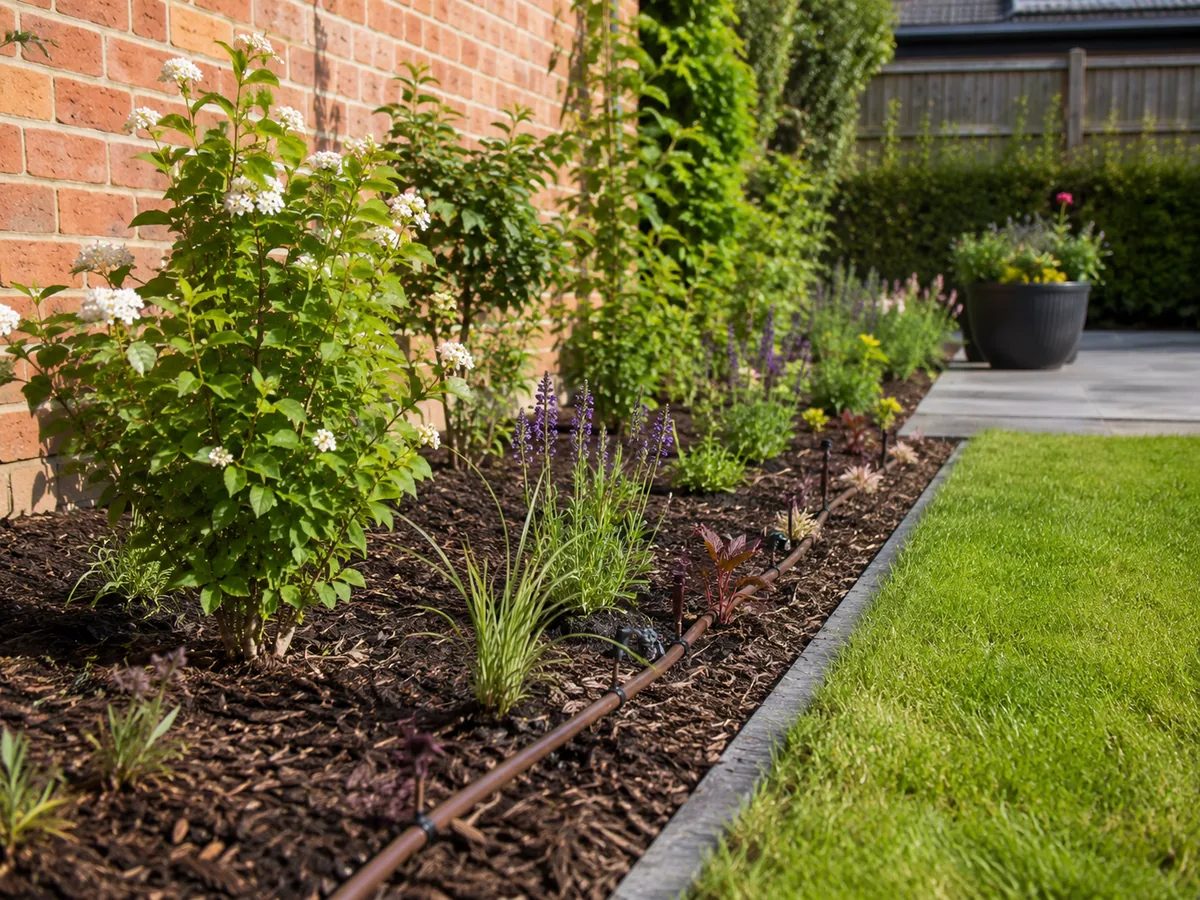
June is a good time to make the decision because the garden is still settling in. Once planting fills out and the lawn is established, retrofitting becomes more awkward. It can mean working around finished areas, disturbing new growth, or compromising on the best layout for the system.
Installing earlier is usually neater and more practical. It also means you are planning before the first proper hot spell exposes the weak points. For homeowners still weighing up what is involved, The Ultimate Guide to Garden Watering System Installation is a useful starting point.
There is also a timing benefit. By the time a garden is already struggling, you are reacting under pressure. Putting the system in place earlier gives new lawns and borders a better chance to establish well through the first part of summer, rather than trying to rescue them once they are already under stress.
Good irrigation installation improves results, not just convenience
It is easy to think of irrigation as a time-saving extra, but the real value is consistency. New turf needs enough water to soak through properly, not just a quick pass over the top. Borders need moisture where the roots are, not broad, uneven coverage that wastes water. RHS guidance supports both points, stressing deep watering for new turf and root-zone watering for new planting.
A professionally installed system helps match the method to the area. It reduces guesswork, improves coverage, and gives the garden a much better chance of establishing evenly. Once installed, it also makes sense to keep it working properly with servicing for irrigation systems.
If you are investing in the garden this summer, do the watering side properly
A new lawn or a freshly planted border is not just about how it looks in June. It is about how well it settles in and performs over the rest of the season. If the watering is inconsistent, the whole job becomes harder than it needs to be.
If you are laying turf or planting new borders this summer, irrigation should be part of the plan from the start.
Back to News