
Installing Irrigation for Newly Planted Shrubs and Borders Before Summer Stress Sets In
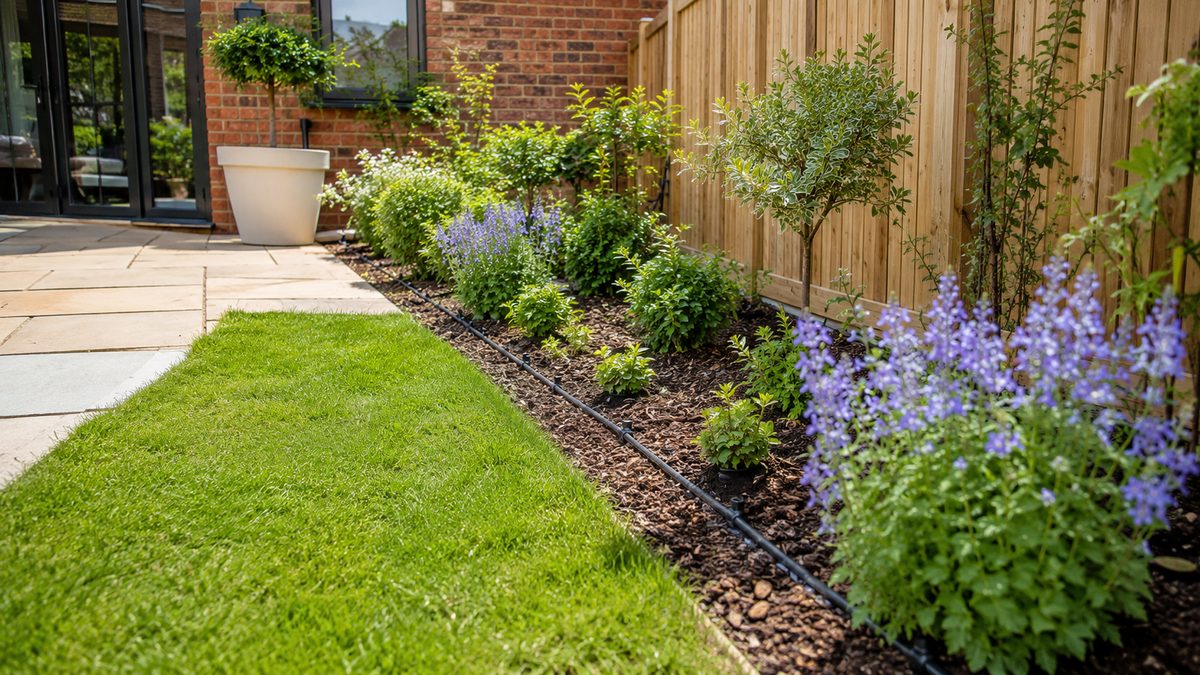
There is a stage in every garden project where the exciting part feels finished. The shrubs are in, the borders have been refreshed, and everything looks far more settled than it did a few weeks earlier. In reality, that is often the point where the real test begins. Once the planting is in the ground, success depends heavily on how well it is watered through the weeks that follow.
That matters especially in UK gardens moving into early summer. The RHS advises that newly planted shrubs need regular watering during their establishment period, and notes that even when the soil surface looks damp, the area around the roots can still be too dry. It also recommends thorough watering so moisture reaches the root zone properly.
Newly planted shrubs and borders are more vulnerable than they look
Freshly planted shrubs have not yet had time to push roots out into the surrounding soil. Borders that have just been replanted may look full and healthy, but that appearance can be misleading. At this stage, the plants are still heavily dependent on reliable moisture levels while they settle in.
This is where many homeowners are caught out. A border can look fine after planting, especially if the weather has been mixed, but a few drier days or a warm, breezy spell can quickly change that. The RHS notes that new shrubs may need regular watering for at least the first two years, particularly in hot, dry or windy weather, or where the soil drains freely.
The issue is not always a complete lack of water. More often, it is inconsistency. A quick pass with a hose can make the surface look wet without properly soaking the rootball below. That can leave new planting under more stress than expected, even when it seems as though the border has been watered.
Hand watering often sounds easier than it is
Most people do not set out to water badly. The problem is that manual watering becomes harder to manage once a garden has several newly planted areas that all need attention at the same time.
Shrubs need deep watering. Borders need even coverage. Different sections of the garden dry out at different speeds depending on sun, shelter and soil type. If you are trying to manage all of that with a hosepipe and a rough routine, it is very easy for some areas to get too little and others to get more than they really need.
That is one reason this issue shows up so often after a border refresh. The planting itself may be done well, the soil may have been improved, and mulch may have been added, but the watering routine still ends up being reactive rather than reliable. By the time the signs of stress are obvious, the plants have already had a more difficult start than they should have.
Drip irrigation is particularly well suited to shrubs and borders
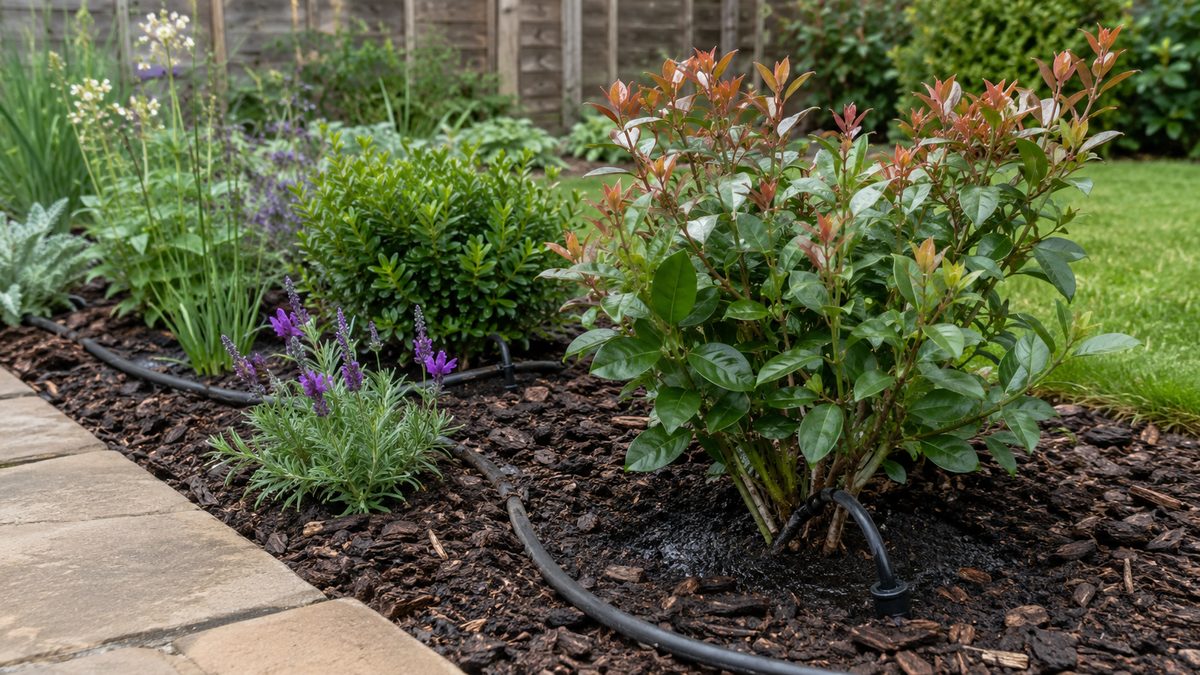
For newly planted borders, targeted watering usually makes far more sense than broad, general coverage. The RHS specifically notes that seep hoses or drip lines can be very effective and water efficient for newly planted borders, particularly when hidden beneath soil or mulch.
That is why irrigation is such a good fit for this type of planting. Instead of watering the whole area from above and hoping enough moisture reaches the roots, a drip-based system applies water where it is actually needed. It is more controlled, more consistent, and usually far easier to manage once the border starts filling out.
This is also where professional irrigation installation becomes important. A well-designed system can be planned around the layout of the border, the type of shrubs being planted, and the way the garden is meant to function over the summer months. That is very different from adding a temporary solution later and hoping it does the job.
It makes far more sense to install before problems start
Once newly planted shrubs begin to struggle, the pressure changes. Instead of planning properly, homeowners are reacting to signs of stress, patchy performance, or disappointing growth. Installing irrigation before that point is simply the better option.
It is usually neater to do while the border is still establishing, and it gives the planting a better chance of settling well from the outset.
The main point is straightforward. If time and money have gone into shrubs, soil preparation and planting design, it makes sense to protect that investment with a watering setup that is built to support the garden properly.
A better start for your borders
New shrubs and fresh borders should not be left to cope on guesswork and irregular watering. Early summer is exactly when consistent moisture begins to matter most, and it is much easier to get ahead of that pressure than to correct the damage afterwards.
If your borders have recently been planted and you want a more dependable watering solution, TCR Watering can help you put the right irrigation system in place before summer stress starts to show.
Back to News